
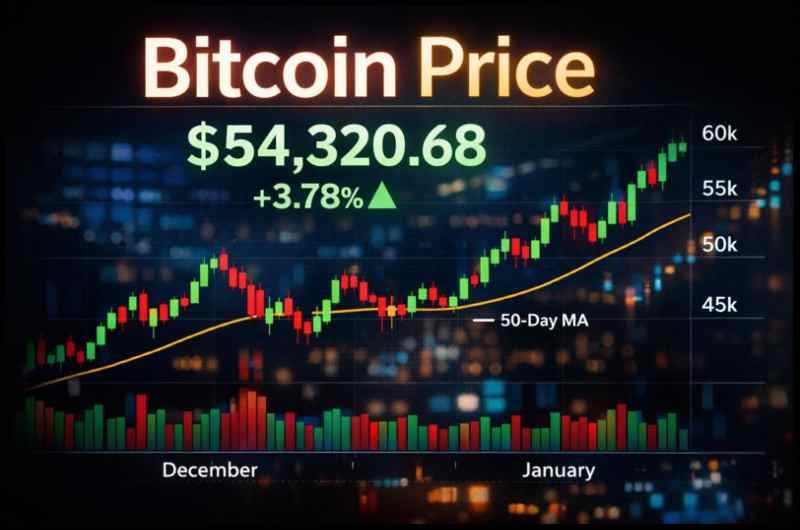
What is Bitcoin worth?
Understanding the Bitcoin Price and Why It Matters
The bitcoin price represents the current market value of one Bitcoin expressed in US dollars or other fiat currencies. Unlike traditional currencies, Bitcoin is decentralized, meaning no government or central bank controls its supply or valuation. Instead, its value is determined by market forces such as supply and demand, investor
sentiment, and global economic conditions. Bitcoin’s price matters because it often sets the tone for the entire cryptocurrency market. When Bitcoin rises, other cryptocurrencies tend to follow. When it falls, the broader market usually reacts negatively. This leadership role makes Bitcoin a key indicator of overall crypto market health.
For more read my article: How to Buy Bitcoin in USA and Store It Safely
Historical Overview of Bitcoin Price Movements
A history of the bitcoin price Bitcoin has one of the greatest histories of all cryptocurrencies in modern-day finance. When Bitcoin was initially released in 2009 it had virtually no market value and was used primarily by a group of developers and tech geeks. Over time as more cryptocurrency exchanges popped up and more people were made aware of this new asset, bitcoin obtained a market price in U.S. Dollars (BTC to USD).
In its early life, bitcoin would bounce around from the value of pennies, to several dollars, to hundreds of dollars. As demand went up, more investors jumped into the new cryptocurrency but in turn increased its volatility. Bitcoin would reach new highs quickly and just as fast hit corrections or would crash down drastically before reaching new highs once again.
In the cycle of price increase and decrease Bitcoin and other cryptos tend to have one common factor: “the halving.” In 2012, 2016, 2020, and 2024 there was what’s called the bitcoin halving event. In a nutshell, this is a process that halves block rewards given for the transaction that have occurred.
It basically slows the rate at which new bitcoins can be mined.
Of course, that has produced lower supply, which is going to contribute to higher prices over the long term if demand keeps going. Bitcoin has some well documented runs up to almost $20,000 at some points in 2017 and then came crushing down in 2018. BTC also came within an earshot of $69,000 in November of 2021 before some bear activity happened to this major cryptotoken and recently has got back on a rally after having its 2024 halving event as well as the first ever SEC approved ETFs were launched this spring.
”Today, we are still seeing impacts of global interest rate environment and the U.S.
Inflation data and ETF ETF approval decisions, individual versus institutional demand trends, the regulatory environment, as well as bitcoin-specific catalyst,” wrote some analysts toYahooFinance. Bitcoin has yielded impressive returns over the years for someInvestors but you ought to acknowledge there’s a risk involving assets of bitcoin.
You have to notice your own historical events doesn’t assure its own future performance but knowing them will give you insights about things that will possibly impact bitcoin rate in united states dollar.
Key Factors That Influence Bitcoin Price
Several factors work together to determine the bitcoin price at any given moment. Understanding these elements can help investors make more informed decisions.
Supply and Demand
Bitcoin has a fixed maximum supply of 21 million coins. This scarcity is built into its code and cannot be changed. As demand increases and supply remains limited, upward pressure on value naturally occurs.
Market Sentiment
Investor psychology plays a major role. Positive news, endorsements from influential figures, or increased adoption can drive buying interest. On the other hand, fear, uncertainty, and doubt can trigger sell offs.
Institutional Adoption
When large companies or financial institutions invest in Bitcoin or offer crypto-related services, it often boosts confidence in the market. Institutional involvement has been a significant driver of long-term valuation growth.
Global Economic Conditions
Inflation, interest rates, and economic instability can influence investor behavior. During times of financial uncertainty, some investors turn to Bitcoin as an alternative asset, affecting the bitcoin price.
Bitcoin Price Volatility: Risk and Opportunity
Volatility is one of Bitcoin’s defining characteristics. Price swings of several percentage points within a single day are not uncommon. While this volatility presents risks, it also creates opportunities for traders who can time the market effectively. Long term investors often view volatility as a natural part of Bitcoin’s growth process. Rather than
reacting to short term fluctuations, they focus on long-term adoption trends and technological development. Understanding volatility is crucial because emotional decision-making during rapid price movements can lead to losses. A disciplined strategy and clear investment goals are essential when dealing with such a dynamic asset.
Bitcoin Price and Its Relationship With Altcoins
Bitcoin’s valuation has a strong influence on alternative cryptocurrencies, commonly known as altcoins. When Bitcoin experiences a strong upward trend, capital often flows into the broader crypto market, benefiting other digital assets. Conversely, when the bitcoin price declines sharply, altcoins frequently experience even larger losses.
This relationship highlights Bitcoin’s dominance and its role as the foundation of the cryptocurrency ecosystem. Some investors track Bitcoin dominance metrics to assess how much of the total crypto market value is held in Bitcoin compared to altcoins.
Long Term vs Short Term Bitcoin Price Strategies
Different investors approach Bitcoin with different time horizons. Short-term traders focus on technical analysis, chart patterns, and market momentum to profit from frequent price changes. This approach requires experience, discipline, and constant market monitoring. Long term investors, on the other hand, often ignore daily price
fluctuations. They believe that as adoption increases and supply remains limited, the bitcoin price will appreciate over time. This strategy, often referred to as “buy and hold,” aims to reduce stress and minimize emotional trading decisions. Both strategies have their advantages and risks, and the right approach depends on individual goals,
risk tolerance, and market knowledge.
The Role of Media and Public Perception
Media coverage significantly affects how people perceive Bitcoin. Positive headlines about adoption, innovation, or regulatory clarity can attract new investors. Negative news, such as security breaches or regulatory crackdowns, can quickly dampen enthusiasm. Social media platforms also play a powerful role in shaping opinions. Influencers,
analysts, and online communities can amplify trends and impact short-term movements in the bitcoin price. Because of this, investors should rely on multiple information sources and avoid making decisions based solely on hype or fear.
Regulatory Impact on Bitcoin Price
Government regulations remain one of the biggest uncertainties in the cryptocurrency market. Clear and supportive regulations can encourage adoption by businesses and institutions. Restrictive policies, however, can limit access and reduce demand. Changes in regulatory stance often lead to sudden market reactions. Announcements related to
taxation, trading restrictions, or legal recognition has historically caused noticeable shifts in the bitcoin price. Staying informed about regulatory developments is essential for anyone involved in cryptocurrency investing.
Future Outlook for Bitcoin Price
Predicting the future of Bitcoin is challenging due to its relatively young age and rapidly evolving environment. However, several trends suggest continued relevance. Increasing institutional participation growing acceptance as a payment method and ongoing technological upgrades all contribute to long term optimism. While short term
volatility is likely to continue, many analysts believe that broader adoption and scarcity could support higher valuations over time. The future bitcoin price will ultimately depend on how well Bitcoin integrates into the global financial system.
Final Thoughts
In the world, there is still one of the most popular and watched virtual currencies thatis bitcoin. This coin, due to its limited supply, decentralization, increasing institutional adoption and ever-growing role in the financial system, still defines much of how institutions and individuals look at the long-term value of digital assets, though it does tend to be more speculative and its value can fluctuates easily due to investor confidence, global economic circumstances, regulatory changes, interest rates, and supply/demand variations.
There is no time during which the Bitcoin market became as intertwined with the traditional financial system as this one is presently: the debut of spot Bitcoin ETFS in the U.S. Further enhanced institutional and retail access to this asset, the 2024 halving decreased the issuance of new Bitcoin further, and the above have presented new variables to take into account when analyzing the bitcoin price.
In general, if you are looking at the Bitcoin, then you will want something else more than its everyday price variations. It’s about supply and demand, cycles of speculation, institutional movements, macroeconomic situations and even regulatory conditions-these all influence and add to your perception of the asset.
Whether you are looking into digital currencies for the first time or you are already an active participant you need to stay current with how things unfold. The truth about the future of Bitcoin is still very much in the air, but its ongoing progression ensures that it is an asset you will want to keep an eye on as the world financial system evolves further.
For more in depth on Bitcoin, cryptocurrency trends, blockchain, stay connected with our platform.: Bitcoinblogs